
AC Capacity Review Before Installation in Dubai
What this page covers
AC Capacity Review Before Installation in Dubai
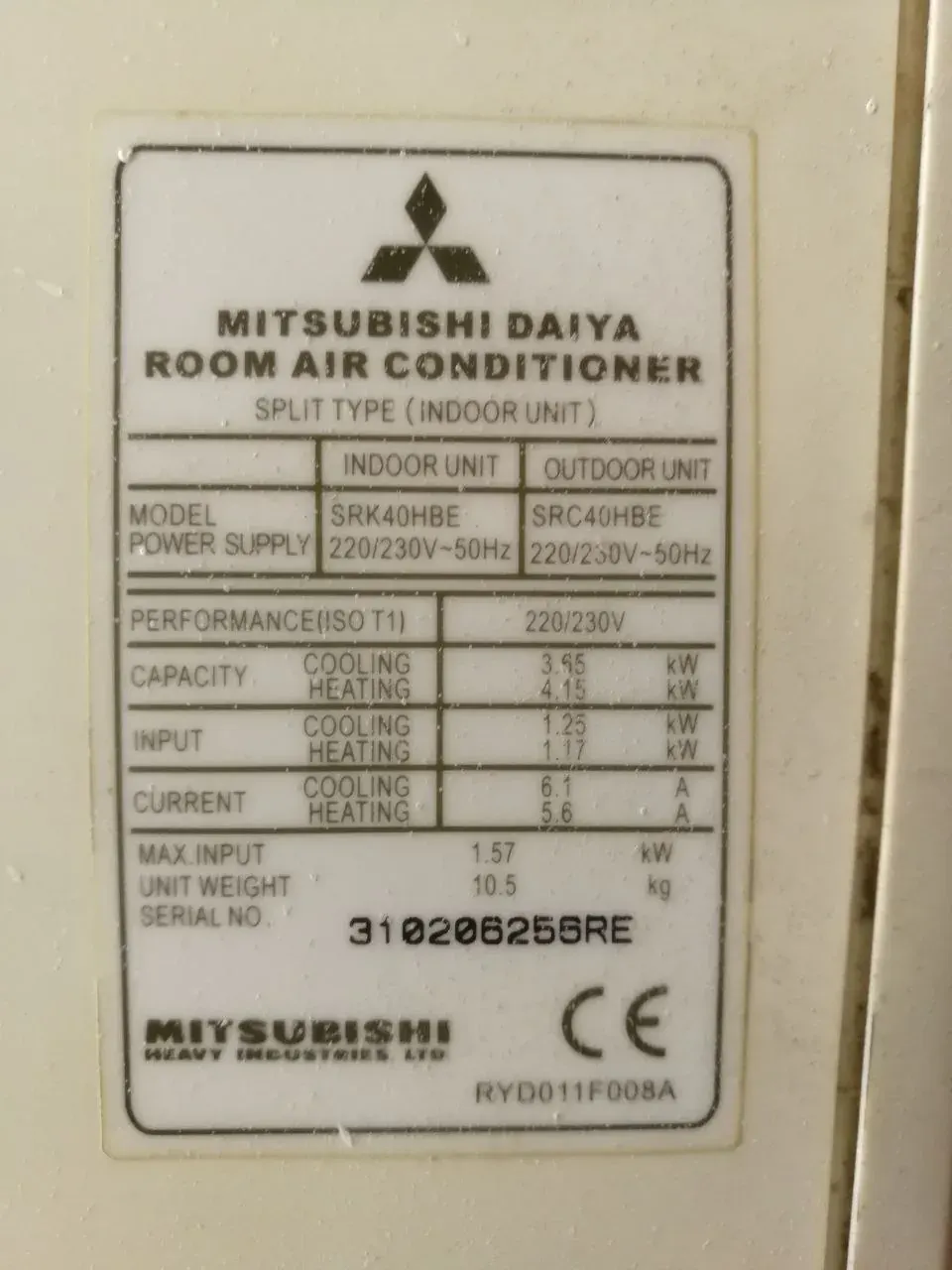
Before installation, an AC capacity review helps confirm the unit details shown on the equipment nameplate. Example labels can show cooling capacities such as 2.5 kW, 2.6 kW, or 8.0 kW, so the exact unit on site needs to be checked.
This page focuses on a practical pre-installation review of the information visible on the unit label, including cooling capacity, voltage, refrigerant type, and pressure markings where they are listed.
In brief
- Cooling capacity can vary clearly from one unit to another, so the exact nameplate should be checked before installation starts rather than relying on assumptions.
- The unit label may also show voltage, refrigerant type, current, and pressure data, so capacity should be reviewed together with the full equipment specifications.
- If the label is faded, missing, or unclear, it is better to verify the equipment details before installation goes ahead.
What to do
A pre-installation AC capacity review starts with reading the manufacturer nameplate and confirming the cooling capacity printed on the unit. Example labels show different capacities, including 2.5 kW, 2.6 kW, and 8.0 kW, which is why every unit should be checked individually.
The review should also cover the technical details printed alongside the capacity value. In the available examples, labels include supply voltage such as 220 to 240 V, refrigerant markings including R32 and R407C or R22, plus current and maximum pressure information. This helps identify exactly what equipment is being prepared for installation.
If the label includes warning or caution text, that should be reviewed before work begins. Example compressor markings include notes about leak test pressure limits, grounding, and terminal cover protection, so a capacity review should form part of a wider equipment verification step.
What to keep in mind
The clearest support for this page comes from equipment label details visible in the supplied examples. Those markings provide practical information such as model data, cooling capacity, heating capacity, voltage, refrigerant type, current, pressure figures, and safety notes.
The examples also show that specifications differ from one AC unit to another. One outdoor unit label shows a total cooling capacity of 2.5 kW with refrigerant R32, while another shows 8.0 kW with refrigerant R407C or R22. That is why capacity review should be based on the actual unit on site.
This page does not claim a full load calculation, a performance result, or suitability for every room size. What is well supported here is the value of checking the unit's marked data and warning information before installation proceeds.