
VRF AC Maintenance in Dubai
What this page covers
VRF AC Maintenance in Dubai
VRF AC maintenance is best assessed on site, with attention to zones, operating modes, and how the system performs in peak heat and part-load conditions.
In Dubai, high temperatures, dust, and long run times can expose faults more quickly. Maintenance often focuses on refrigerant condition, heat exchangers, condensate drainage, filtration, and outdoor unit heat rejection.
In brief
- VRF maintenance is usually judged by real operating conditions across multiple zones, not handled like a basic split AC service.
- On larger VRF installations, shared PVC condensate drain lines above ceilings can become a key maintenance point.
- In Dubai, heat and dust can lead to dirty coils, drainage issues, and lower efficiency, so regular checks help identify problems earlier.
What to do
A useful VRF maintenance visit starts with the actual system layout and how cooling is used across the property. In multi-zone systems, the main concern is how well performance is maintained in different areas during peak demand and partial load, not just what appears on the nameplate.
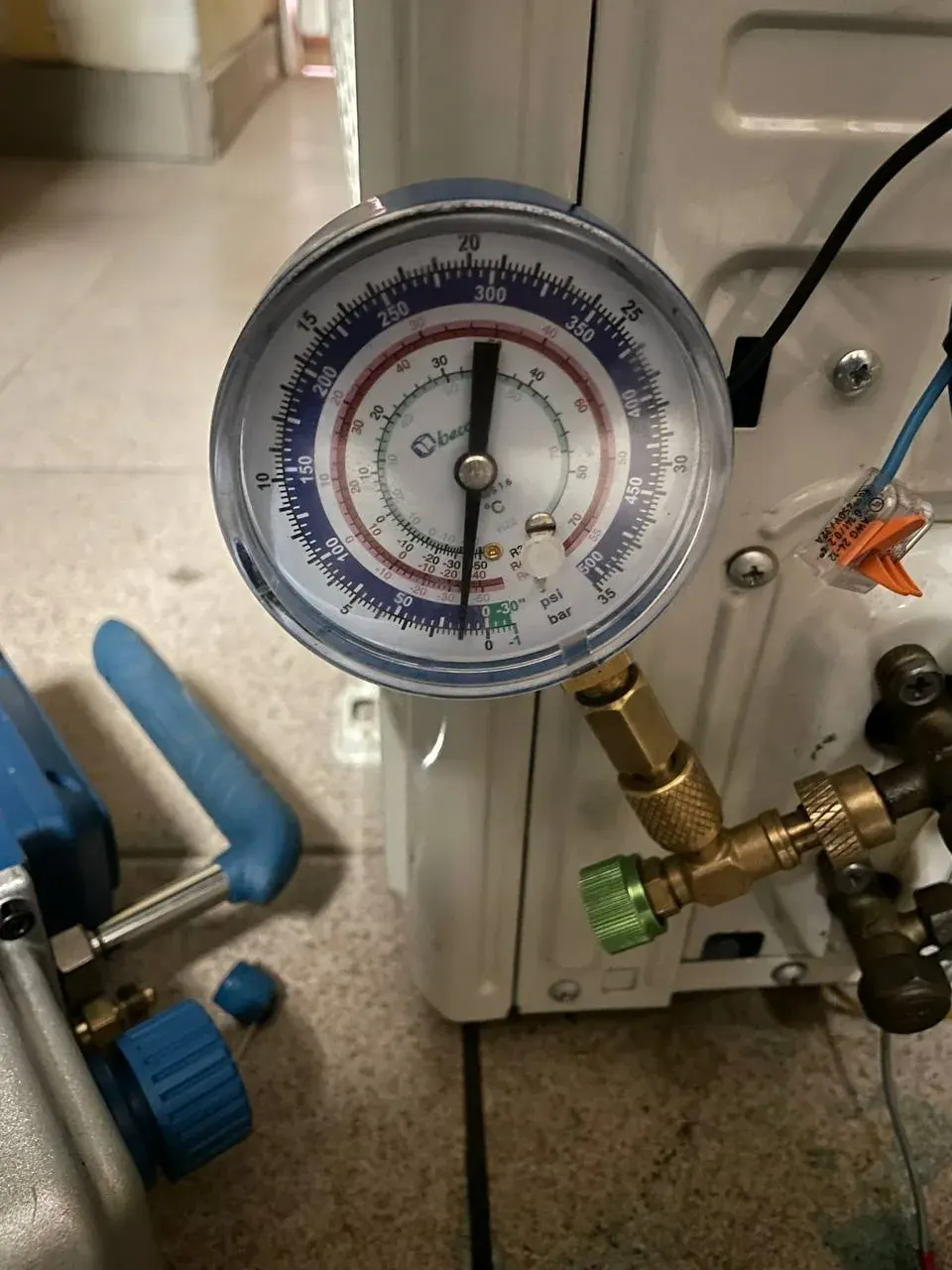
Refrigerant assessment is a regular part of VRF service work, especially when cooling performance has changed. Any charge-related work should follow the installed design and manufacturer guidance, because VRF systems depend on specific controls and engineered pipe arrangements rather than shortcut service methods.
Drainage also needs attention on larger VRF sites. Where many indoor units connect to long condensate runs above ceilings, maintenance may include checking for blockage risk, pipe condition, and whether flushing or another suitable cleaning method fits that installation.
What to keep in mind
VRF maintenance matters more when cooling is part of the building infrastructure rather than a simple comfort add-on. In Dubai, high outdoor temperatures and dust can reveal weaknesses faster, especially around outdoor heat rejection, exchanger cleanliness, filtration, sealing, and condensate handling.
This service is most relevant for properties with many zones, outdoor units exposed to dusty conditions, and indoor units connected to shared drainage routes. Common operating issues include fouled heat exchangers, condensate drain faults, efficiency loss, and rising energy use as performance drops.
What maintenance should include depends on the equipment, building layout, and current operating condition. For VRF systems, service decisions are better based on real site behaviour and actual high-temperature performance than on catalogue figures alone.